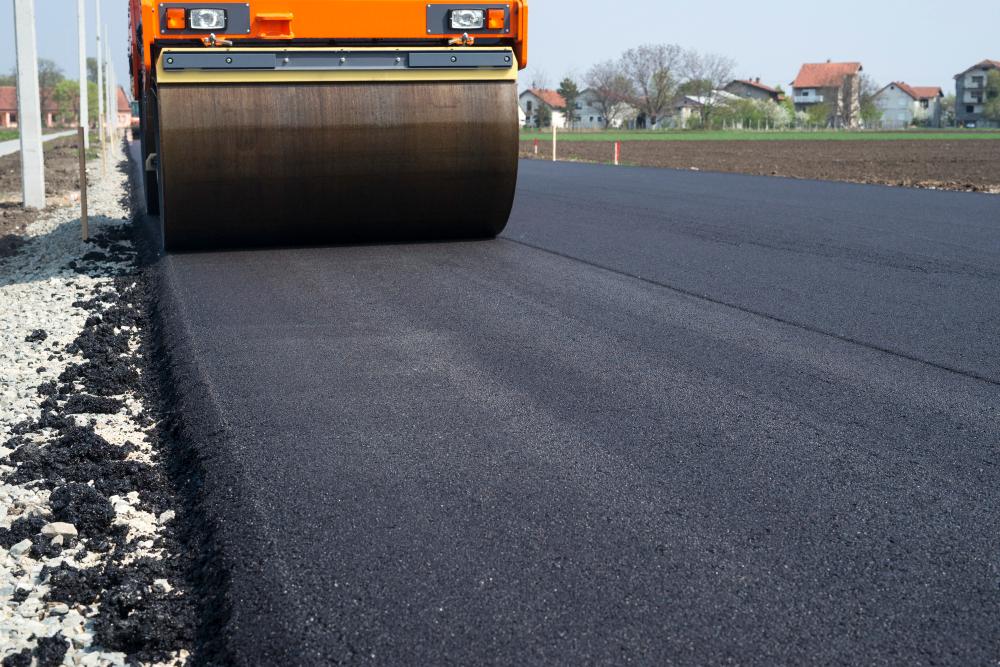
The success of a commercial paving project in Utah hinges on the quality of the installation. A well-paved parking lot or roadway enhances safety, improves curb appeal, and provides a durable surface that withstands the state’s unique climate challenges—from scorching summer heat to freeze-thaw cycles in winter. Conversely, a substandard job leads to premature cracking, drainage issues, and costly repairs that disrupt business operations.
Choosing the right team for expert asphalt paving is therefore a critical business decision. It’s not merely about finding the lowest bidder; it’s about identifying a contractor with the specific expertise, resources, and proven track record to deliver a commercial-grade result. This process requires a methodical approach to vetting potential partners.
This guide outlines the essential criteria for selecting a premier commercial paving contractor in Utah, from verifying credentials and reviewing past work to understanding the project lifecycle and asking the right questions before signing a contract.
Verify Credentials and Commercial Specialization
Before evaluating bids or looking at photos, start with foundational verification. A contractor’s legitimacy and area of specialization are non-negotiable.
Licensing, Insurance, and Bonding
Any contractor you consider must be fully licensed to operate in Utah. Licensing indicates they have met minimum state requirements. More critical for commercial projects is comprehensive insurance, including general liability and workers’ compensation. Request certificates of insurance and verify they are current. For larger projects, a performance bond protects you if the contractor fails to complete the work. Never proceed with a contractor who cannot provide proof of these credentials.
Focus on Commercial Experience
Residential and commercial paving are different disciplines. Commercial projects involve larger scales, complex engineering for heavy loads (like delivery trucks and fire lanes), stringent adherence to ADA (Americans with Disabilities Act) standards for slopes and ramps, and intricate stormwater management plans. Ask pointed questions about the volume of commercial work a company completes annually. A team specializing in commercial work will understand these requirements inherently and plan for them from the first site visit.
Evaluate Their Portfolio and Project History
A contractor’s past performance is the most reliable indicator of future results. Move beyond a website gallery and seek substantive proof of capability.
Review Case Studies and Site Visits
Ask for a portfolio of completed commercial projects similar in scope to yours—whether it’s a large retail parking lot, an industrial access road, or a hospital complex. Better yet, request addresses of projects that are 1-3 years old and visit them. Look for signs of quality: uniform surface color, clean edge work around curbs and drains, proper crowning for water runoff, and an absence of alligator cracking or potholes. Speaking with the property manager of a past project can provide invaluable, unbiased insight into the contractor’s professionalism and work quality.
Check References and Online Reputation
Reputable contractors will readily provide professional references. Contact these references and ask specific questions: Was the project completed on time and within budget? How did the crew handle communication and on-site challenges? Was the site left clean and safe? Additionally, check third-party review platforms (like Google Business Profile or BBB) for patterns in feedback. Pay attention to how the company responds to any negative reviews, as this reflects their commitment to customer service. For businesses seeking a reliable partner, working with a proven local specialist like asphalt paving Utah can provide the assurance of established community reputation.
Understand Their Process and Project Management
The methodology a contractor uses separates adequate work from exceptional work. Their process should be transparent, detailed, and tailored to your site’s specific conditions.
Site Assessment and Proposal Detail
A serious contractor will insist on a thorough site evaluation before providing a quote. This assessment should include testing the stability and composition of the subgrade—the foundation upon which the asphalt sits. The proposal you receive must be detailed and itemized, not a single lump sum. It should specify the thickness of the asphalt layers (base and surface courses), the type and grade of asphalt mix (suitable for Utah’s temperature ranges), drainage solutions, compaction methods, and a clear timeline with milestones.
Communication and Project Supervision
For a commercial project, clear communication protocols are essential. Identify your main point of contact and the on-site project supervisor. Ask how often you will receive updates and how change orders are handled. A professional outfit will have a structured project management approach, ensuring that from demolition and grading to final compaction and striping, every phase is overseen by experienced personnel. This level of organization minimizes disruptions to your business operations.
Scrutinize Materials, Equipment, and Warranty
The quality of materials and machinery directly impacts the longevity of your pavement. The warranty offered is the contractor’s final vote of confidence in their work.
Asphalt Mix and Modern Equipment
Inquire about the source of their asphalt mix. Reputable contractors use high-quality, hot-mix asphalt from trusted local plants. The mix design should be appropriate for the expected traffic load (e.g., a higher stone density for heavy truck areas). Also, observe their equipment. Well-maintained, modern machinery—such as precision pavers, vibratory steel-wheel rollers, and infrared patching units—ensures a more uniform, dense, and durable mat. Outdated or poorly maintained equipment can compromise the final product.
The Importance of a Strong Warranty
A warranty is a critical component of your contract. Understand exactly what is covered (typically workmanship and materials), for how long (common ranges are 1-3 years for commercial work), and what actions could void it. Be wary of contractors offering unusually long warranties (e.g., 10+ years) that may be unenforceable or full of loopholes. A clear, straightforward warranty from a reputable company provides real peace of mind. It’s a sign they stand behind their work and use quality materials, a standard you should expect from any dedicated provider of asphalt paving Utah services.
Compare Bids Comprehensively, Not Just on Price
While budget is a key factor, the lowest bid is often the most expensive choice in the long run. A comprehensive bid comparison looks at value, not just cost.
Analyzing the Cost Breakdown
Line-item bids allow for an apples-to-apples comparison. One bid might be higher because it includes superior compaction, a thicker asphalt layer, or more detailed site preparation—all factors that extend pavement life. Another might be lower because it cuts corners on subgrade preparation or uses a lower-grade mix. Ask questions about any significant discrepancies between bids to understand what you are—and are not—paying for.
Assessing Professionalism and Rapport
Finally, consider the intangibles. Was the contractor prompt and professional in all interactions? Did they listen to your concerns and offer knowledgeable solutions? A collaborative, communicative relationship is vital for a smooth project. The right team will act as a partner, guiding you through the process and ensuring the final outcome meets both your functional needs and budgetary constraints.
Frequently Asked Questions
What is the most important factor when choosing a commercial paving contractor?
While multiple factors are critical, verifiable commercial experience is paramount. A contractor must demonstrate a proven track record with projects of similar scale and complexity to yours. This experience ensures they understand load-bearing requirements, ADA compliance, drainage engineering, and the logistical challenges of working on active commercial properties.
How long should a quality commercial asphalt pavement last in Utah?
With proper installation on a stable subgrade and appropriate thickness for the traffic load, a commercial asphalt surface in Utah should last 15-20 years before requiring a major overlay. However, regular maintenance like sealcoating every 2-3 years and prompt crack sealing is essential to achieve this lifespan, given the state’s climate stresses.
What questions should I ask when checking references?
Go beyond asking if they were satisfied. Ask specific questions: Was the project completed on schedule? How did the crew handle unexpected site issues? Was communication consistent and professional? Would they hire the same contractor for another project? Inquire about the pavement’s performance 1-2 years after completion.
Why is the subgrade so important?
The subgrade is the compacted soil foundation beneath the asphalt. If it is unstable, improperly sloped, or inadequately compacted, it will settle unevenly over time. This settlement is the primary cause of cracks, potholes, and pavement failure, regardless of the asphalt quality on top. A professional contractor invests significant time in preparing and testing the subgrade.
What does a typical commercial paving warranty cover?
A standard workmanship and materials warranty typically covers defects in the asphalt mix and issues arising from improper installation, such as premature raveling (loose stones) or cracking due to poor compaction. It generally does not cover damage from external factors like water intrusion from poor site drainage, extreme weather events, or damage from heavy equipment not intended for the surface.
Can paving be done during colder Utah months?
Hot-mix asphalt requires specific ground and air temperatures to be placed and compacted properly. For optimal results, paving in Utah is best scheduled between late spring and early fall. Some contractors may use warm-mix additives or special techniques for cooler shoulder seasons, but winter paving is generally avoided as it can severely compromise durability.
Conclusion
Selecting the right team for a commercial asphalt project in Utah is a strategic investment. By meticulously verifying credentials, scrutinizing past commercial work, understanding the proposed process, and comparing bids on value rather than just price, you position your project for long-term success. The goal is to find a contractor who views your project not as a one-time job, but as a lasting asset that reflects on their reputation as much as it does on your property.
A well-executed pavement installation minimizes future maintenance costs, enhances safety and accessibility, and projects a professional image. Taking the time to choose a truly expert partner ensures that your investment delivers reliable performance for years, weathering Utah’s distinct seasons while supporting the daily flow of your business.